

Grazing systems
In principle, pastures provide feed for animals, offer them a high degree of freedom of movement and enable them to behave naturally. In agricultural practice, however, pasture farming is proving increasingly difficult. The lack of technological innovation in smart farming in pasture management over many years means that pasture farming is currently uncompetitive and unattractive for farmers. There is an urgent need to develop alternative technologies for managing grazing animals.
Virtual fencing – a future technology for efficient and sustainable pasture use
Flexible and dynamic virtual fencing offers an alternative to rigid conventional pasture fencing for pasture management. Science and practice recognise the high potential of this technology for both production-oriented, intensive grassland farming and extensive pasture management with the primary goal of landscape conservation. Virtual fencing enables flexible and improved control of cattle access to pasture land. This allows grazing pressure on pasture land to be adjusted flexibly and precisely. Small-scale fencing plays an important role in pasture management. For intensive grazing, small-scale fencing within the farm's grazing area is important for the daily, needs-based portioning of the available grazing area and optimisation of growth and feed quality by preventing browsing and trampling. Even for extensive grazing for landscape conservation, the ecological resources that need to be temporarily removed from grazing for nature conservation reasons are often small in size and require small-scale fencing.
Virtual fencing is used to control the movement and grazing of cattle by excluding them from certain areas of the pasture. Virtual fencing systems consist of a collar that is attached to the animals' necks. When the animal approaches a virtual (invisible) boundary, the collar emits acoustic warning signals in the form of a tone scale with increasing frequency, similar to the beeping sound of a parking aid. If the animal attempts to enter the area of the pasture excluded by the virtual fence, the acoustic warning signals are followed by an electrical impulse. The acoustic warning signal of the virtual fencing replaces the visual signal of the conventional pasture fence and announces the electrical impulse. The impulse energy of the electrical impulse of the virtual fence is one tenth that of a visible electric pasture fence. The virtual fences are set up on the pasture area using a satellite map via an app. Areas that are not to be grazed by cattle at all or only temporarily are thus excluded. Virtual fences are a prerequisite for “virtual herding”, i.e. grazing systems without fences. In this way, the current feed requirements of the grazing animals and the feed available to the animals on the pasture can be optimally matched. At the same time, ecologically sensitive areas and habitat structures, e.g. areas with meadow bird nests, islands of old grass for butterflies and grasshoppers, can be taken out of use, at least temporarily. This opens up the possibility of designing pasture systems in a particularly sustainable way.
The management of large herds of animals, extensive grazing areas that are often difficult for grazing animals to access, and the need for extensive fencing in traditional grazing systems highlight the disruptive potential of innovative, fence-free animal guidance technology. The development and application of this technology must take into account the wide variation in grazing conditions that prevail in practice. Dairy cows, which obtain most of their feed energy from pasture grass according to the New Zealand system, need new pasture land with young feed growth once or twice a day to ensure an adequate energy supply, which then covers the herd's feed requirements for a day or half a day. Fence-free grazing technology can drastically reduce the amount of work involved, increase profits and enhance the importance of grazing. Animal management technology can also be used in open land nature reserves. Virtual fencing allows the grazing pressure, which is necessary from an ecological point of view but varies over small areas, to be precisely adjusted. In this way, desired vegetation structures and diversity patterns can be created and developed. The technology thus opens up the possibility of very targeted, spatially differentiated landscape management through grazing.
Development of innovative grazing systems using virtual fencing as a disruptive animal guidance technology
GreenGrass partners Texas Trading and Horizont Group are developing animal guidance technology as part of the project. They can draw on experience gained internationally at various research institutions. Based on the available experience, the technology is being further developed in the partners' laboratories and the available components are being combined to form a functioning system. Field tests are carried out on test sites belonging to the Living Labs. The development work also includes the creation of interfaces to the remote sensing data (Landscape) of the forage and biotic features of the pasture areas.
Parallel to the development work on animal guidance technology, grazing systems for cattle are being designed that utilise this technology. Virtual fencing opens up completely new possibilities for the design of grazing management. In agricultural practice, grazing systems are differentiated according to the size of the area and the duration of grazing by the grazing animals, ranging from permanent pasture with low stocking density to rotational and portion grazing with increasing stocking density. Virtual fencing makes these categories superfluous, allowing grazing management to be designed in a highly variable and extremely efficient manner. This is to be developed for different production systems (dairy cows, extensively reared beef cattle, landscape conservation systems) and framework conditions (size and layout of the pastureland in the area). The applicability of these new systems will first be tested and refined in the Living Labs under experimental conditions. This also includes analysing the effects on biodiversity.
Initial trials of virtual fencing with cattle in summer 2020
This year, the first training trial of virtual fencing with young cattle took place at the Relliehausen experimental farm. The aim was to evaluate the suitability of the technology in terms of its learnability and its effects on the activity and behaviour of young cattle as indicators of animal welfare. The trial was approved by the animal welfare service of LAVES (Lower Saxony State Office for Consumer Protection and Food Safety) (file number: 33.19-42502-04-20/3388).
A total of 24 young cattle were examined over a period of 12 days. Twelve heifers were assigned to a control group (pf group) and twelve to a virtual fencing group (vf group). The pf group was characterised by the complete fencing of its pasture area with visible electric fences. In the vf group, one side of the pasture area was bordered by a virtual fence, while the remaining three sides were fenced with visible electric fences. On the vf group's test pasture, a virtual fence was activated to enclose a pasture area of approximately 200 m². On the eighth day of training, the virtual fence was moved forward by 3 m. This provided approximately 100 m² more fresh grazing area.
The virtual fencing proved to be functional and effective and showed no detectable negative effects on the behaviour of the heifers studied compared to the control group with conventional fencing. The virtual fencing was 100% effective in preventing the heifers from grazing on the excluded area. During the training period, the number of electrical impulses received decreased, while the number of acoustic signals increased during this period. The frequency of contact with the electrical impulse of the virtual fence is comparable to that of the visible electric fence. Virtual fencing as a method of controlling the movement and grazing of cattle by virtually excluding certain areas of the pasture was successfully learned. During training, the heifers used the acoustic signal to graze close to the virtual fence where the grass was fresher. It was often observed that the animals only slowly turned away from the virtual fence at the last tone of the acoustic warning melody without receiving an electric pulse. No negative effects of the virtual fencing on the activity and behaviour of the heifers were observed. The reactions of the animals after immediate contact with the electric pulse of the virtual fence were comparable to those after contact with the visible electric pasture fence.
Ecological analysis of innovative grazing systems
The potential for biodiversity and associated ecosystem services is also being analysed for the innovative grazing systems. By specifically controlling the spatial-temporal behaviour of the animals with the help of virtual fencing, it is possible to influence the processes that promote structural diversity in the landscape and thus overall diversity. The investigations focus on the structural and habitat diversity of the landscape as well as on biotic diversity and its function on the areas and sub-areas. In terms of species diversity, the focus is on taxa that provide important ecosystem services. These include pollinators (e.g. bees, butterflies), antagonists (e.g. predatory beetles), soil organisms (e.g. earthworms), flowering plants and habitat integrators (e.g. birds). Field surveys (ground truthing) are linked to remote sensing data (Landscape) to establish habitat and biodiversity indicators. In the future, information on flowering resources from drone data can be used to predict the diversity and abundance of pollinating insect species. Together with the Landscape work package, Justus Liebig University Giessen is developing a proof of concept for this. On this basis, diversity maps are generated that serve to control the spatial-temporal behaviour of animals using virtual fencing (animal guidance technology). The Living Labs test areas are primarily used to examine how efficiently landscape design measures (e.g. the creation of ungrazed strips or islands of old grass) can lead to an increase in structural and species diversity with the help of grazing control.
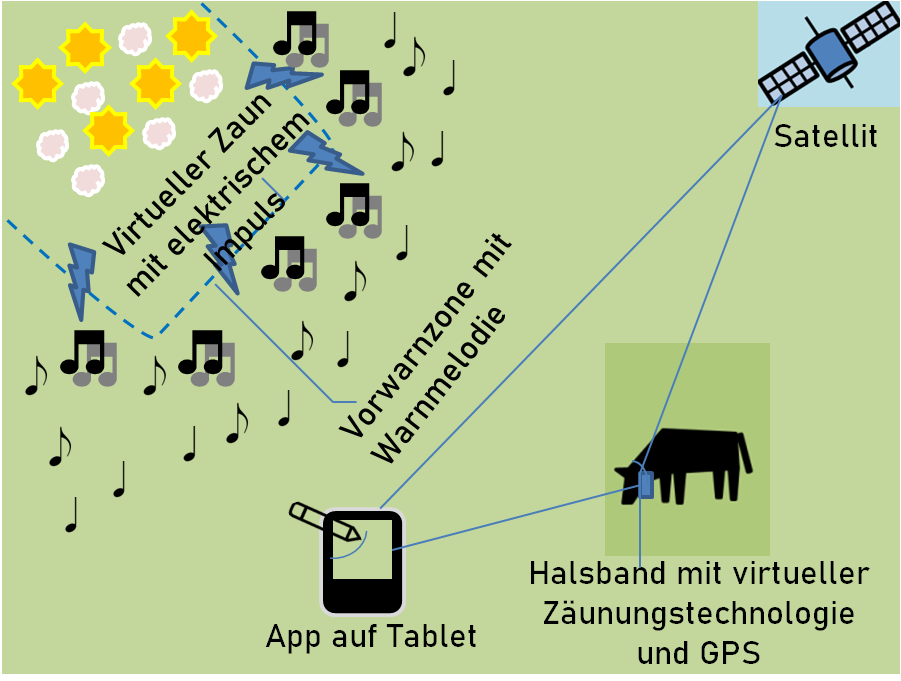
How virtual fencing works
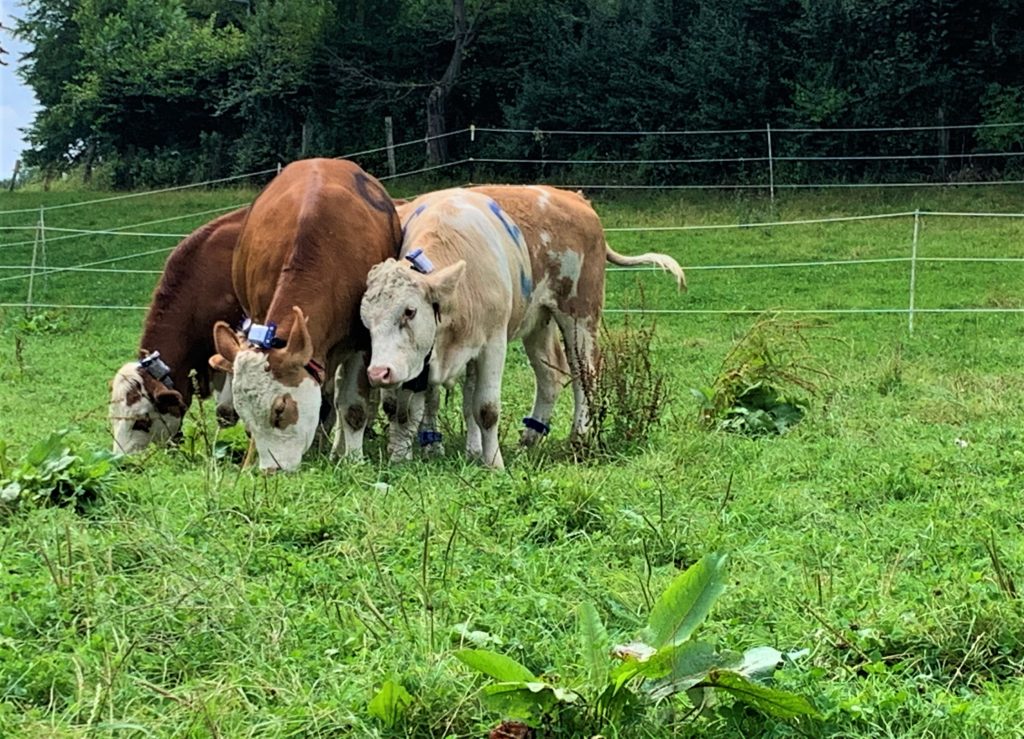
Young cattle grazing in the pasture.
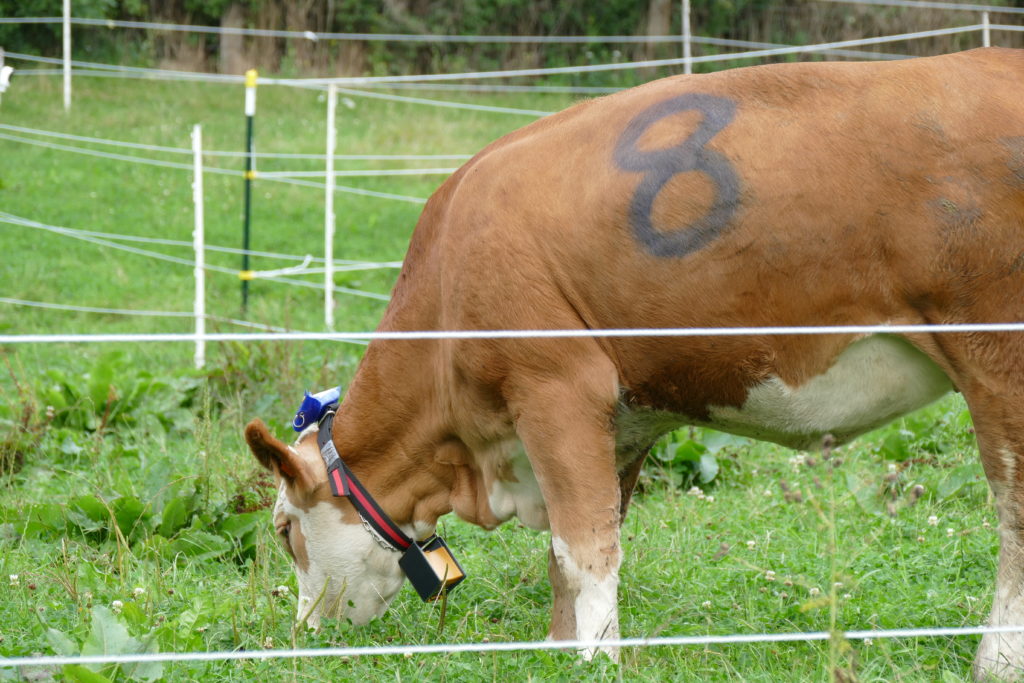
Heifer equipped with a collar from a virtual fencing system (Nofence) and a GPS logger.
Short video clip on virtual fencing in a training experiment with young cattle (heifers) at the Relliehausen experimental farm of the University of Göttingen in southern Lower Saxony. The training experiment was approved by the animal welfare service of LAVES.



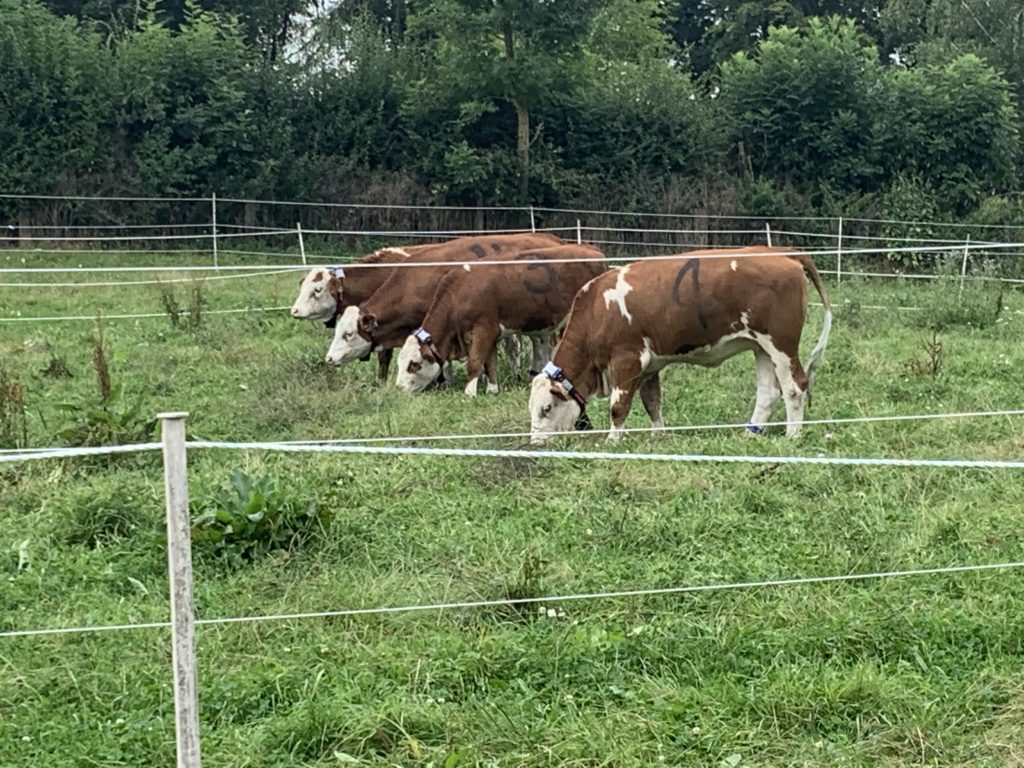
Control group of the training experiment. The pasture area is fenced off exclusively with visible electric fences.
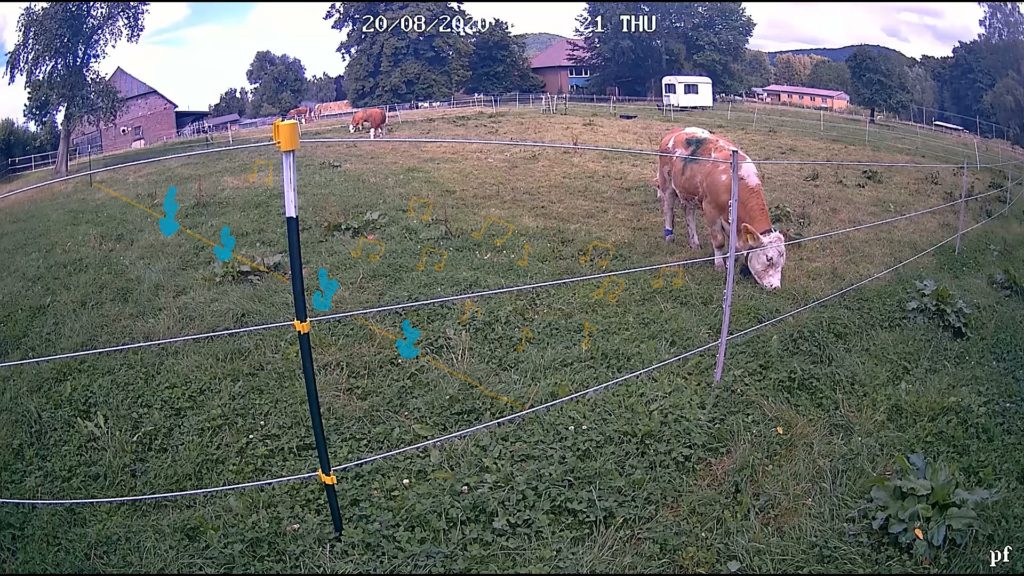
Relaxed grazing along the virtual boundary, taking advantage of the acoustic warning melody of the virtual fencing system.

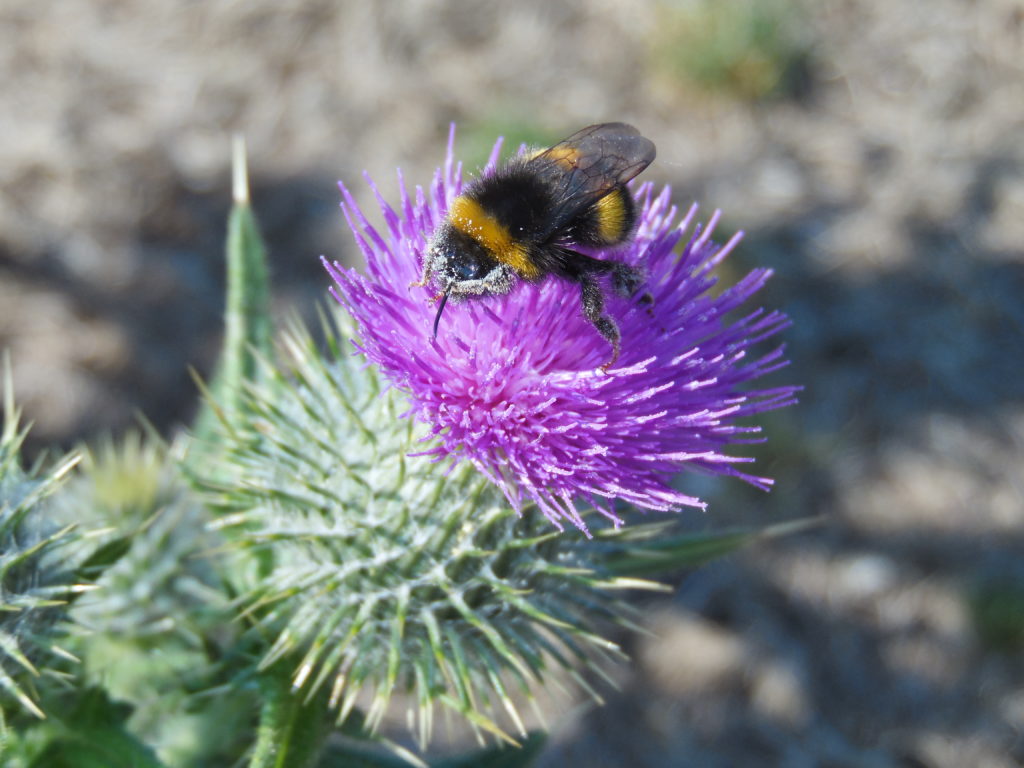
Pollinating insects (e.g. bumblebees) as indicators of biodiversity in open landscapes.