
Our vision
GreenGrass aims to realign agricultural grassland use in Central Europe by developing and introducing innovative grazing systems with the help of new key technologies (virtual herding and remote sensing). In Central Europe, grassland forms the matrix for the provision of important ecosystem services in the agricultural landscape. A significant proportion of the biological diversity in the agricultural landscape has evolved over many centuries in co-evolution with grazing livestock. Modern agricultural animal husbandry systems no longer use grazing. The high yields demanded of animals are currently difficult to achieve with grazing alone. GreenGrass is initiating a trend reversal here and bringing cows back into the landscape.
Innovative technologies guide the animals across pastureland and through the landscape (virtual herding). Remote sensing technologies provide high-resolution spatial and temporal information on feed quantity and quality, pasture accessibility, and existing or newly created habitats within the pastureland that are worthy of protection. An innovative multi-level information system combines existing information with remote sensing data, analyses it in real time and develops routines for the spatial and temporal control of the animals. This optimises the feed supply on the pasture and produces high-quality premium products (quality meat and milk). At the same time, public goods such as important habitat structures in the agricultural landscape, e.g. wet depressions with species-rich vegetation, areas with meadow bird nests, islands of old grass for butterflies and grasshoppers, can be specifically protected and recreated. These benefits of the innovative production system are reliably demonstrated to consumers and authorities via the transparent, interactive, multi-level information system. Farmers can market their high-quality products appropriately and are rewarded appropriately for providing public goods.
In the long term, GreenGrass will create a sustainable, animal-friendly and fair production system for pasture farming, which, with the development and adaptation of smart farming technologies, will represent a completely new information environment for farmers, consumers and authorities alike. In the long term, herd managers will be able to control the animals properly and efficiently from their desks, so to speak, and contribute to harmonising the conflicting goals of agricultural production and ecological sustainability.
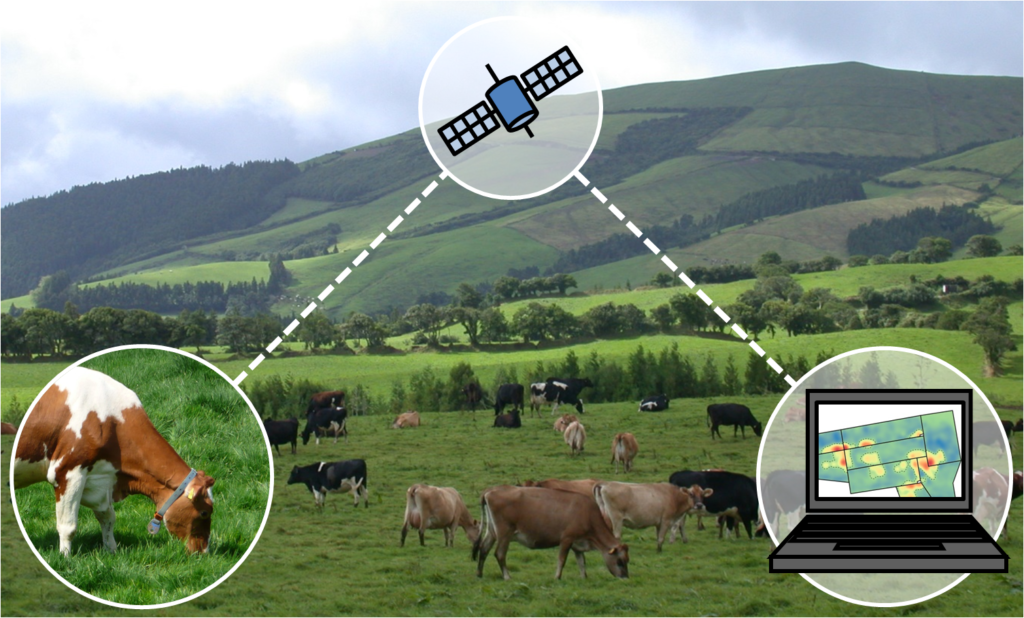
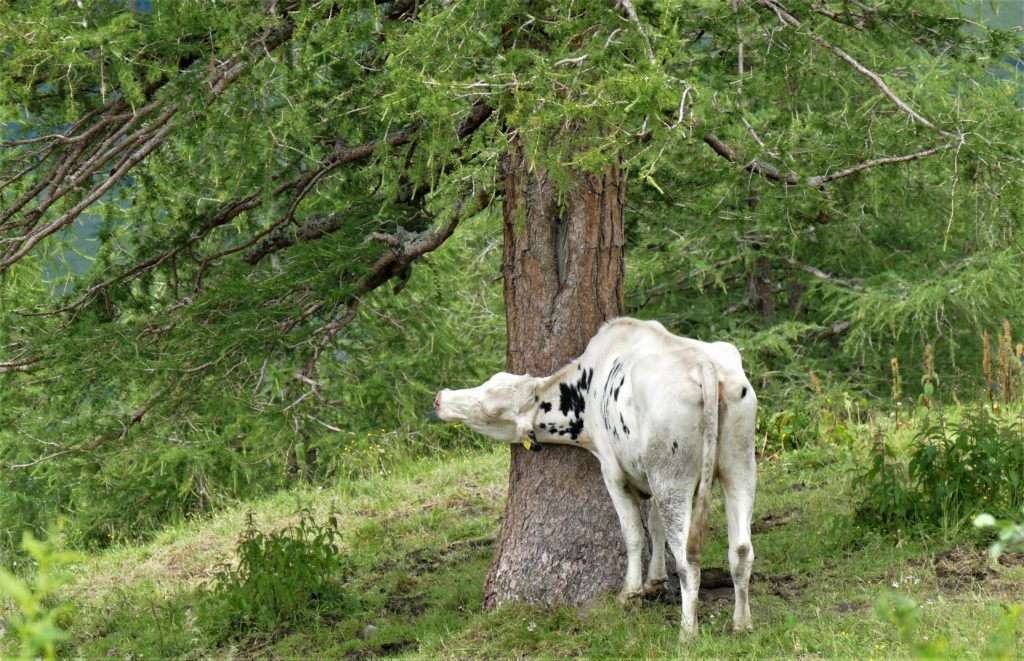
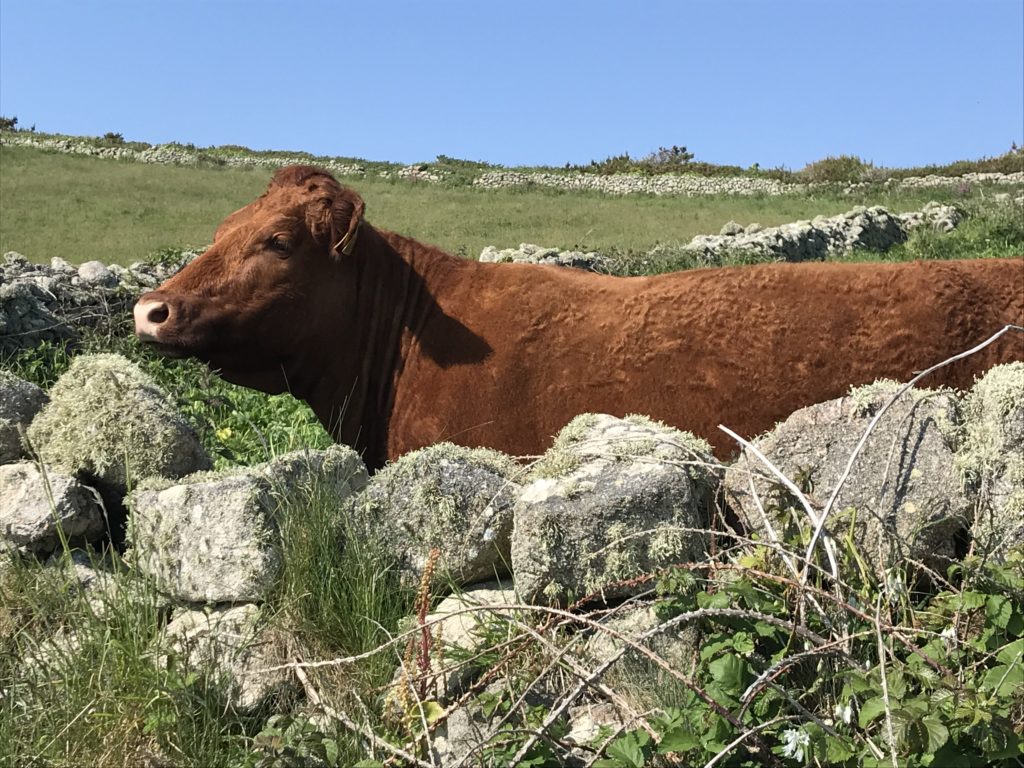
The vision of GreenGrass – bringing cows back to the countryside with the help of sustainable, innovative grazing production systems.
Our GreenGrass approach – holistic and transformative
GreenGrass brings together a wide range of scientific disciplines, institutions and stakeholders from agriculture and nature conservation, as well as industry and trade, in an interdisciplinary and transdisciplinary network. GreenGrass is initiating a transformative research and development process. GreenGrass develops and utilises pioneering smart farming technologies for the development and establishment of sustainable pasture production systems. Animal guidance technology (virtual herding/fencing) is being developed and tested as a key technology. This key technology should make it possible to control animals' spatial movements without fences and without restricting their behaviour. Accordingly, new grazing systems are being designed and tested (Grazing systems). Remote sensing techniques using automated drones and frequent satellite images are being improved to provide high-resolution spatiotemporal information for controlling the animals and setting up virtual fences to divide the pasture into strips and exclude certain areas (Landscape). A multi-level information system processes the flood of drone and satellite data into operational information for animal management. At the same time, it documents the production process of grazing, the use of pasture land, the production of high-quality animal products and the provision of ecosystem services, making them transparent and verifiable for the value chain (Information). The profitability of this innovative production process is analysed, and the marketing opportunities are also researched in detail (Market). At the start of the project, GreenGrass will set up three living labs in which all relevant stakeholders from agriculture, nature conservation, associations, business and veterinary medicine are represented in regional advisory boards and actively participate in shaping the development process (Stakeholders). This is to ensure that GreenGrass not only achieves a high level of technological development, but also creates good conditions for the innovation to be put into practice.
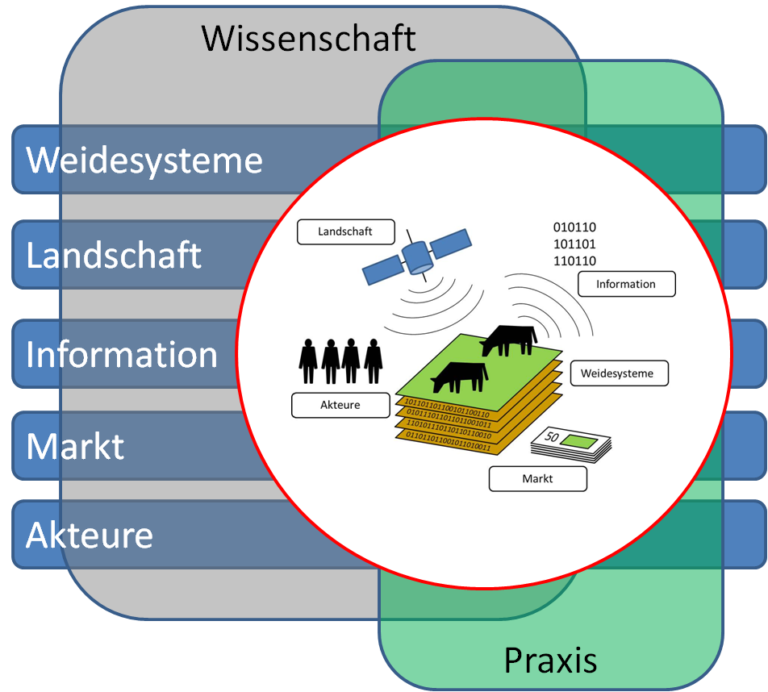
The GreenGrass approach – a transformative and holistic development process incorporating science and practice.