
Stakeholders
GreenGrass does not focus on individual innovations in smart farming that are far removed from agricultural practice, but rather on systemic solutions for the sustainable use of grassland. Therefore, the effective involvement of relevant stakeholders in the development and implementation processes of innovative management is crucial for the acceptance of innovations and their success. However, research and practice are often insufficiently linked, and innovations do not meet the needs of practitioners in agriculture. The Stakeholders work package ensures that the development of innovative pasture production systems is user-oriented and relevant to practice, and meets the diverse requirements of a multifunctional agricultural landscape.
In order to develop user-oriented system solutions, ‘living labs’ – a new, transdisciplinary research approach – are attracting increasing interest, including in the agricultural sector. Living labs are user-centred, real-world and open platforms that involve stakeholders from science, industry and society, but above all prospective everyday users in the innovation process. Against this backdrop, GreenGrass has established a comprehensive network of stakeholders from research, agriculture, downstream industries, associations, nature conservation organisations and consumers, who are shaping the innovation process together and on an equal footing. The aim is to develop an innovative grazing system with improved value creation and increased economic, ecological and social resilience.
One-size-fits-all solutions are not suitable for grassland, as conditions vary greatly from region to region. Instead, strategies tailored to regional or local conditions are needed. GreenGrass is establishing three regional living labs that differ significantly in terms of their economic, ecological and social conditions. For the development process, a regional advisory board will be established in each living lab to reflect the diversity of views of the stakeholders involved. In a search and discovery phase, the various needs of the stakeholders will be identified and condensed into design requirements for the innovative grazing system. These requirements will then be taken into account in the development process. Users will be involved in the development, implementation and refinement of the design ideas through repeated feedback loops. Local knowledge about natural features, structural conditions and the challenges of pasture farming in the Living Lab will be made available for the innovation process via the stakeholder networks. To facilitate learning processes between the three regional Living Labs, a supra-regional advisory board with members from the three regional Living Lab advisory boards is being set up. This board will address cross-regional aspects of the development and implementation of innovative pasture production systems.
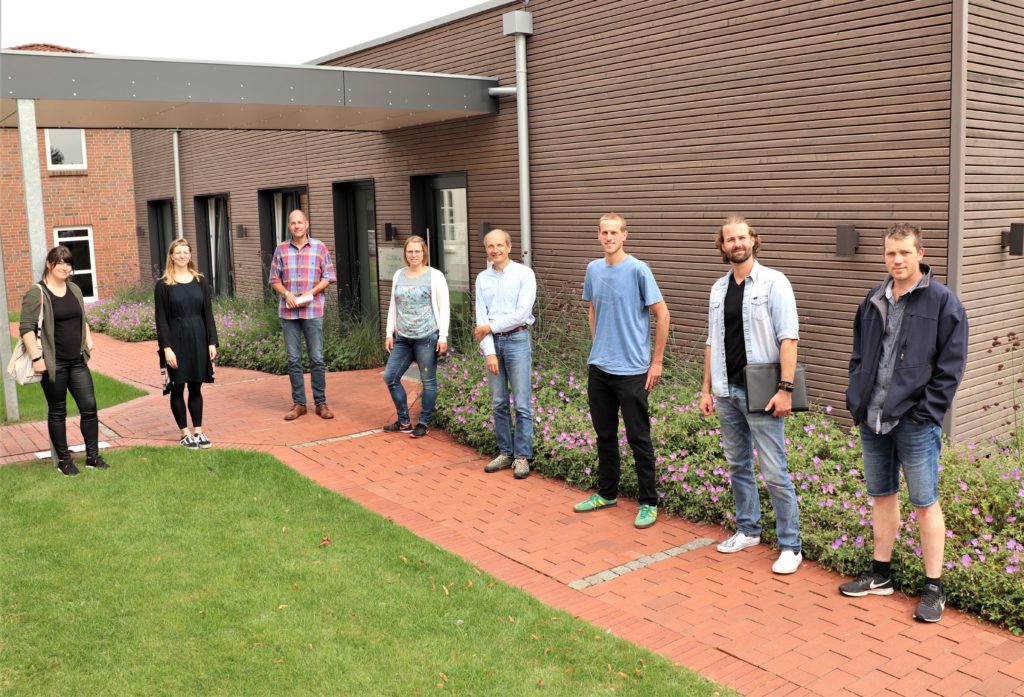
Cows back to pasture! – Easy to say, but it requires consideration of the requirements of many interest groups. To this end, GreenGrass has implemented regional Living Lab advisory boards.


Online conferences of the Living Lab advisory boards to discuss the opportunities and challenges of GreenGrass technologies with farmers, authorities, veterinarians, researchers, associations and nature conservation organisations.