Field day on the Darß peninsula
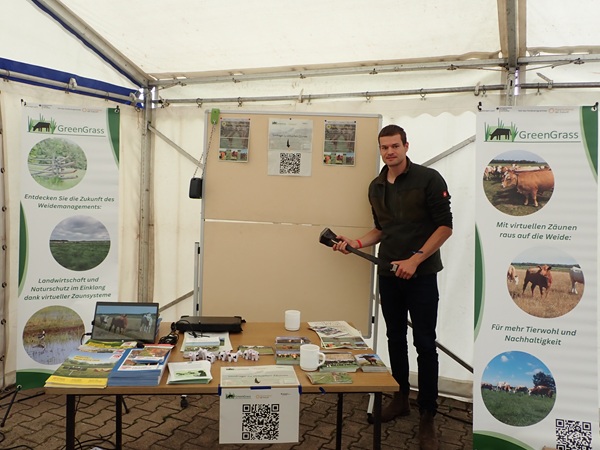
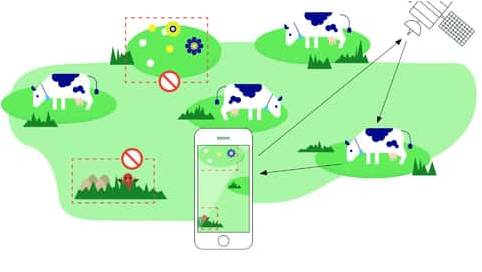
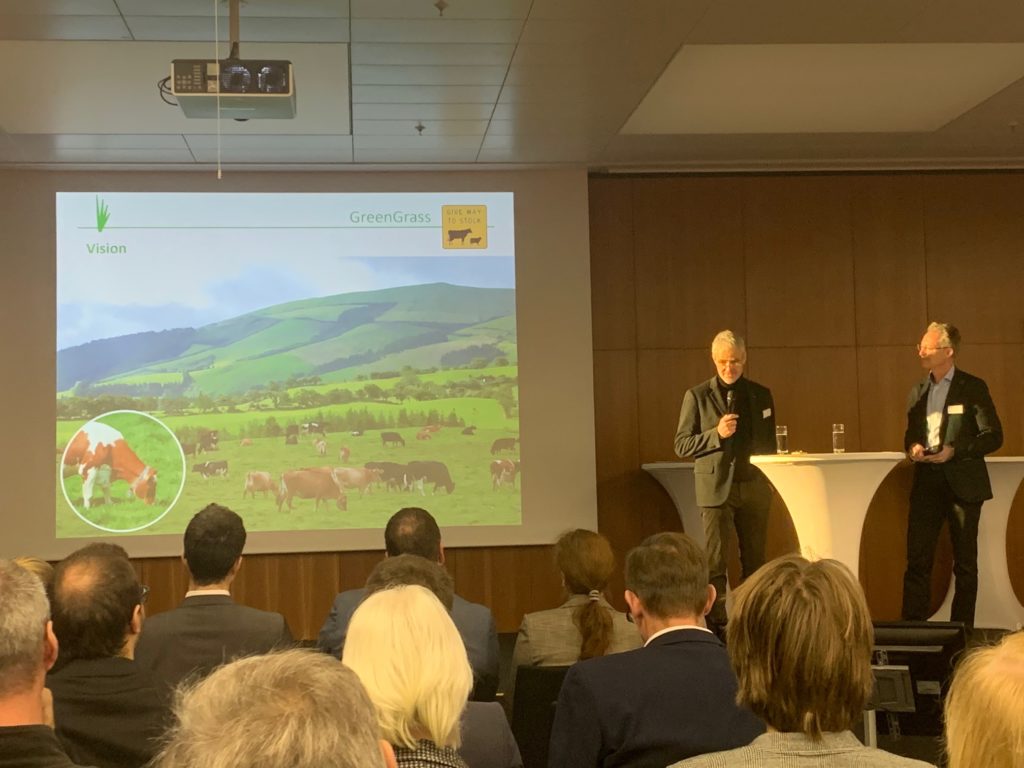
Sunny weather, relaxed cows and a very interested audience – this characterised our field day at the Darß estate on 30 September 2025. The aim of the field day was to communicate our project and, in particular, the concept of virtual fencing to a wider range of practitioners. Our audience of 25 people ranged from farmers to animal welfare officials and national park employees. After a welcome by Marc Fiege, manager of the Darß estate, Prof. Dr Johannes Isselstein from the University of Göttingen first presented the vision of GreenGrass as well as the functionality and advantages of virtual fencing systems. Participants were then able to learn about the individual work packages of the project at various stations. The focus was on animal welfare, legal issues and remote sensing, as well as the application of the decision support software for pasture management developed in the project. The lively discussions and questions showed us that these topics are of great interest. After a covered wagon ride through the beautiful Bodden landscape of the Darß peninsula, the participants were treated to a demonstration of virtual fences in action on the test site. Looking out over the landscape, the potential of virtual fences for biodiversity became clear, and our test animals could be observed grazing peacefully in the pasture. In addition, the participants were able to hold a collar in their hands and ‘learn’ a virtual fence boundary using acoustic signals. At the end of the day, a tour of the farm was offered and the participants were able to round off the field day with a visit to the estate kitchen restaurant. We would like to take this opportunity to express our sincere thanks to Gut Darß for their support and excellent cooperation.
Interview with WDR 5 Quarks
Creating fences with a finger on your smartphone: In an interview on 8 August 2025 by WDR5 Quarks, we explain the advantages of virtual fence systems for farmers from minute 36:27 onwards.
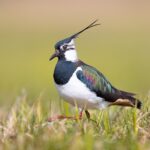
Blog article: How virtual fences can protect birds
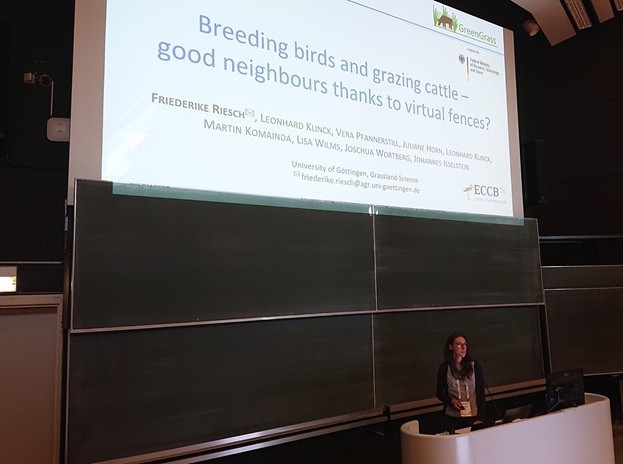
In our current experiments, we are working with collars from the Norwegian company Monil. A blog article dated 9 July 2025 here describes how virtual fences can bring nature conservation, species protection and agriculture together.
Report on Deutschlandfunk radio
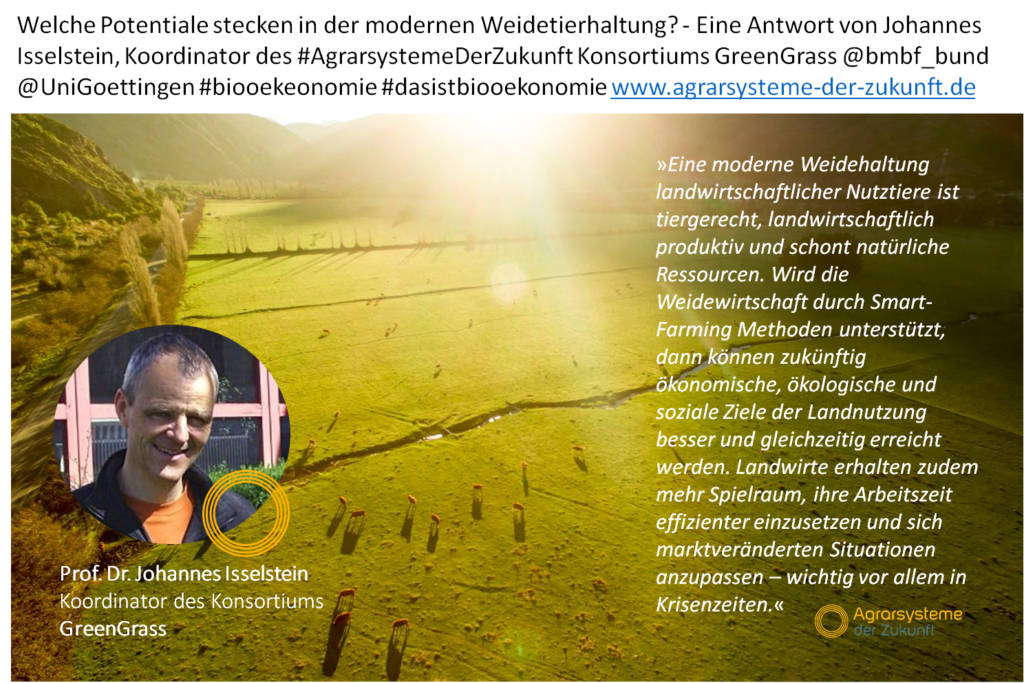
In its "Current Research" section, Deutschlandfunk reports on the potential benefits of virtual fencing with collars for biodiversity and interviews Prof. Dr. Isselstein from the University of Göttingen about our project. You can find the article from 21 May 2025 here.
Exchange meeting in Cottbus
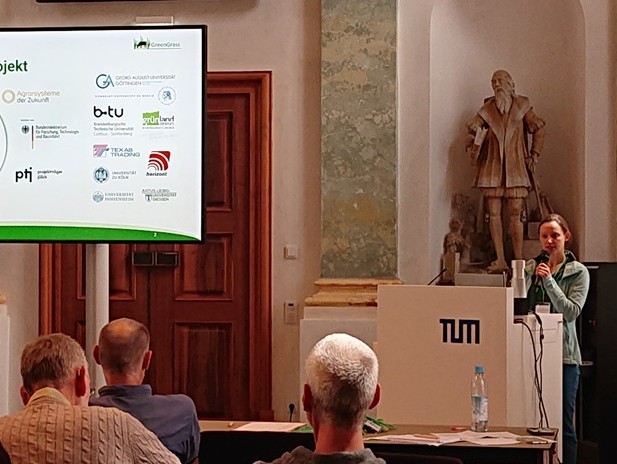
As a joint project, GreenGrass thrives on its interdisciplinary nature: scientists from the fields of ecology, economics, law and geography work together with commercial enterprises. Regular exchange meetings are essential to facilitate this collaboration. On 20 and 21 May 2025, representatives of all project partners met at the Technical University of Cottbus to discuss the next joint goals. The focus was on data exchange: What data needs to be collected and how, so that it can be used in all work packages? Who can contribute which data that is still missing? And how can the collected data be evaluated and published in conclusive publications? With a ‘roadmap’ for the next upcoming tasks and their timing, we are now well on our way in GreenGrass2.0!
The GreenGrass Portrait Film
On 31 August 2021, our colleagues spent a whole day filming at our test sites in Relliehausen, southern Lower Saxony: virtual fencing, sensors, UAV flights and part of our GreenGrass team at work! The portrait films of all consortia involved in the ‘Agricultural Systems of the Future’ project can be found at https://agrarsysteme-der-zukunft.de/news/2022-05-06-portratfilme-der-konsortien-agrarsysteme-der-zukunft-!
Report on f3: farm.food.future
Virtual fences: the future of grazing? - Article in agrarheute
The revolution in pasture farming: smartphones and GPS transmitters are to be used to manage pasture farming in the future. Researchers at the University of Göttingen are testing whether this really works. Could this be a step towards greater animal welfare? The first test run was positive.
You can find the entire agrarheute article from 11 November 2020 here.
Contribution on 3sat nano
3sat nano accompanied us for a day as we worked on our training experiment with virtual fences. You can find the entire 3sat nano video report from 16 October 2020 here.
GreenGrass impulse statements at the Global Bioeconomy Summit 2020
GreenGrass at the BMBF status seminar ‘Agricultural Systems of the Future’
On 4 and 5 February 2020, the first status seminar of the Agricultural Systems of the Future took place at the Federal Ministry of Education and Research. All eight projects funded by the programme, including GreenGrass, were presented, and the time was used for networking and identifying interfaces with the other consortia.
The article Smart und nachhaltig – die Agrarsysteme der Zukunft(bioökonomie.de) provides an overview of all funded projects.
Press release from Georg August University of Göttingen
Modern livestock farming increases the pressure to use arable land for feed production. As a result, modern dairy farms no longer put their cows out to pasture. In the GreenGrass project, researchers in a supra-regional and interdisciplinary consortium led by the University of Göttingen are investigating how grazing animals can be brought back into the landscape and how new ways of sustainable and efficient pasture management can be created.
The press release from Georg August University of Göttingen dated 9 September 2019 can be found here.